
Rocket.Chat
Open SourceCentralize real-time messaging, voice, video, AI, and apps for secure, reliable and unified…
Free plan checked against Rocket.Chat's pricing page on . Re-checked monthly.
About Rocket.Chat
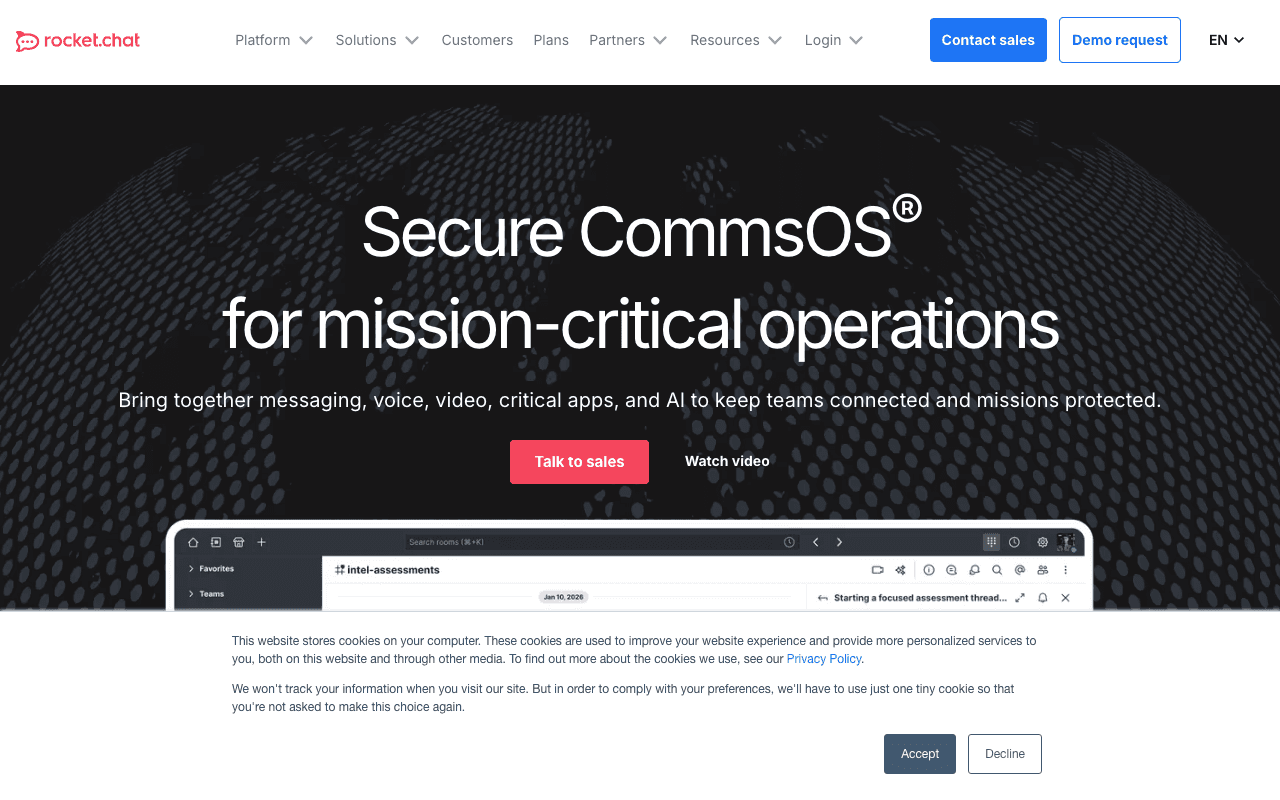
Rocket.Chat is a self-hostable team chat platform with channels, threads, voice and video, an omnichannel inbox and an apps engine, chosen by organisations that want Slack-style messaging on their own servers. Two free options exist: the open source Community edition and the free Starter plan, both self-managed.
What the free plan gives you
The Community edition is open source and free to run for up to 100 concurrent users. It covers core messaging, channels and direct messages, basic identity management and video calls through Jitsi or BigBlueButton, with push notifications capped at 10,000 a month and limited app integrations. The Starter plan is also free, self-managed only, and supports up to 50 users with unlimited push notifications, one workspace per organisation, marketplace apps via the Apps Engine, LDAP and Active Directory authentication, single sign-on (SAML, OAuth, OpenID Connect), multi-factor authentication and mobile data-at-rest encryption. Both come with community support and documentation only.
Where the free plan stops
The user caps are the hard edges: 50 users on Starter or 100 concurrent on Community. Community also runs out of push notifications quickly for an active mobile team, and lacks the SSO and LDAP that Starter includes. Beyond those numbers you move to the Commercial plan, which is quote-based; Rocket.Chat no longer publishes a per-user price, and the previous Pro plan was retired for new purchases on 29 April 2026.
Who it suits
Small companies, non-profits and technical evaluations under 50 users should pick Starter for the SSO and unlimited push, provided they can host it. Community suits open source projects and hobbyist servers that do not need enterprise auth. Teams above 100 users, or anyone wanting Rocket.Chat to host it, need to talk to sales.
Key Features
Pros & Cons
The free plan in practice
What you can actually do on Rocket.Chat's free plan (Starter: up to 50 users; Community: up to 100 concurrent users, self-hosted), where it stops, and when it's worth paying.
What you can do free
- Starter plan: free, up to 50 users, unlimited push notifications
- Starter includes SSO (SAML, OAuth, OIDC), LDAP/AD and MFA
- Community edition: open source, up to 100 concurrent users
- Channels, threads, DMs, file sharing, searchable history
- Jitsi and BigBlueButton video calls
- Marketplace apps via the Apps Engine (Starter)
Where it stops
- Self-hosting only on both free options
- Community push notifications capped at 10,000/month
- 50-user cap on Starter, 100 concurrent on Community
- Paid Commercial plan is quote-only
When to upgrade to a paid plan
Rocket.Chat is open source, so self-hosting is free and unlimited. The only reason to pay is convenience: choose a hosted or cloud option when you'd rather not run and maintain it yourself, or need official support.
Categories
Free Plan Details
| Free Plan | |
| Free Tier | Unlimited Free Tier |
| User Limit | Starter: up to 50 users; Community: up to 100 concurrent users, self-hosted |
| Open Source |
What's the free tier actually like?
Used Rocket.Chat's free plan? Tell people what it was really like — what you hit, what surprised you, whether the limits held. No account needed.
No comments yet. If you've used the free plan, you know something the pricing page doesn't say.
Related Tools

Slack
Boost productivity and save time with Slack — the AI work platform for managing projects…

Element
Element is a Matrix-based end-to-end encrypted messenger and secure collaboration app. It’s…

Jitsi Meet
Join a WebRTC video conference powered by the Jitsi Videobridge
Something outdated or missing? Let us know